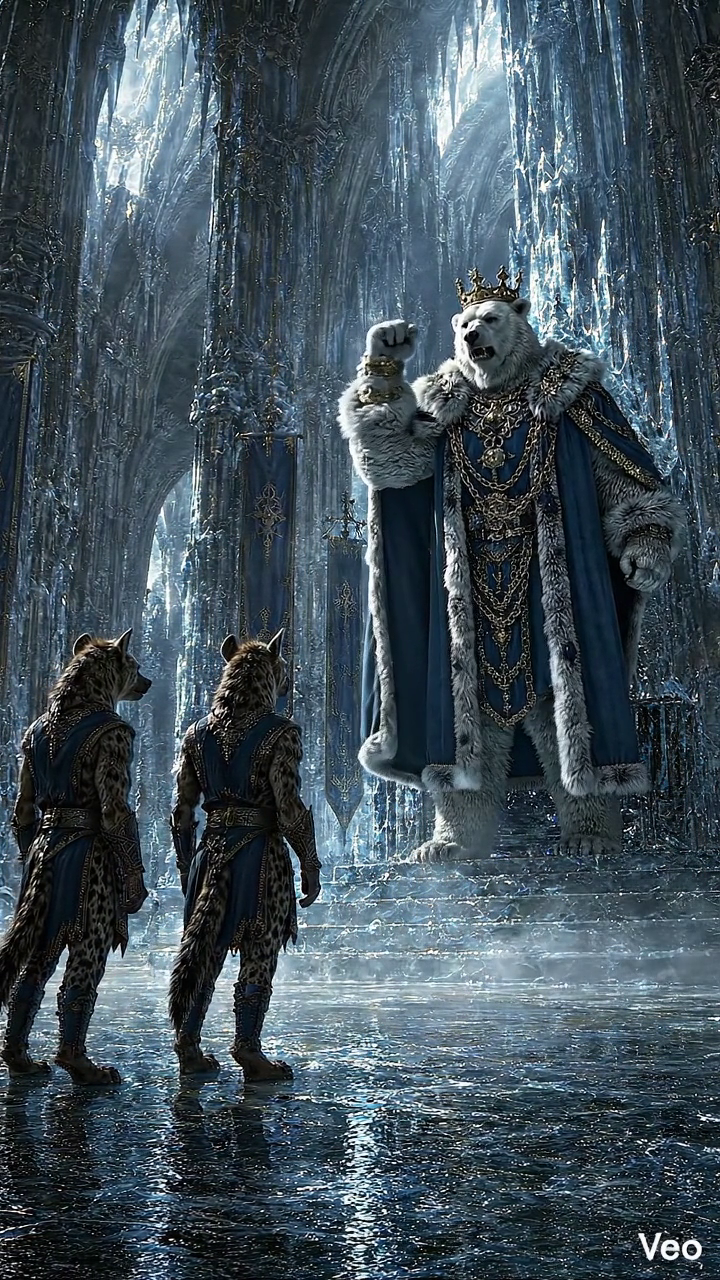
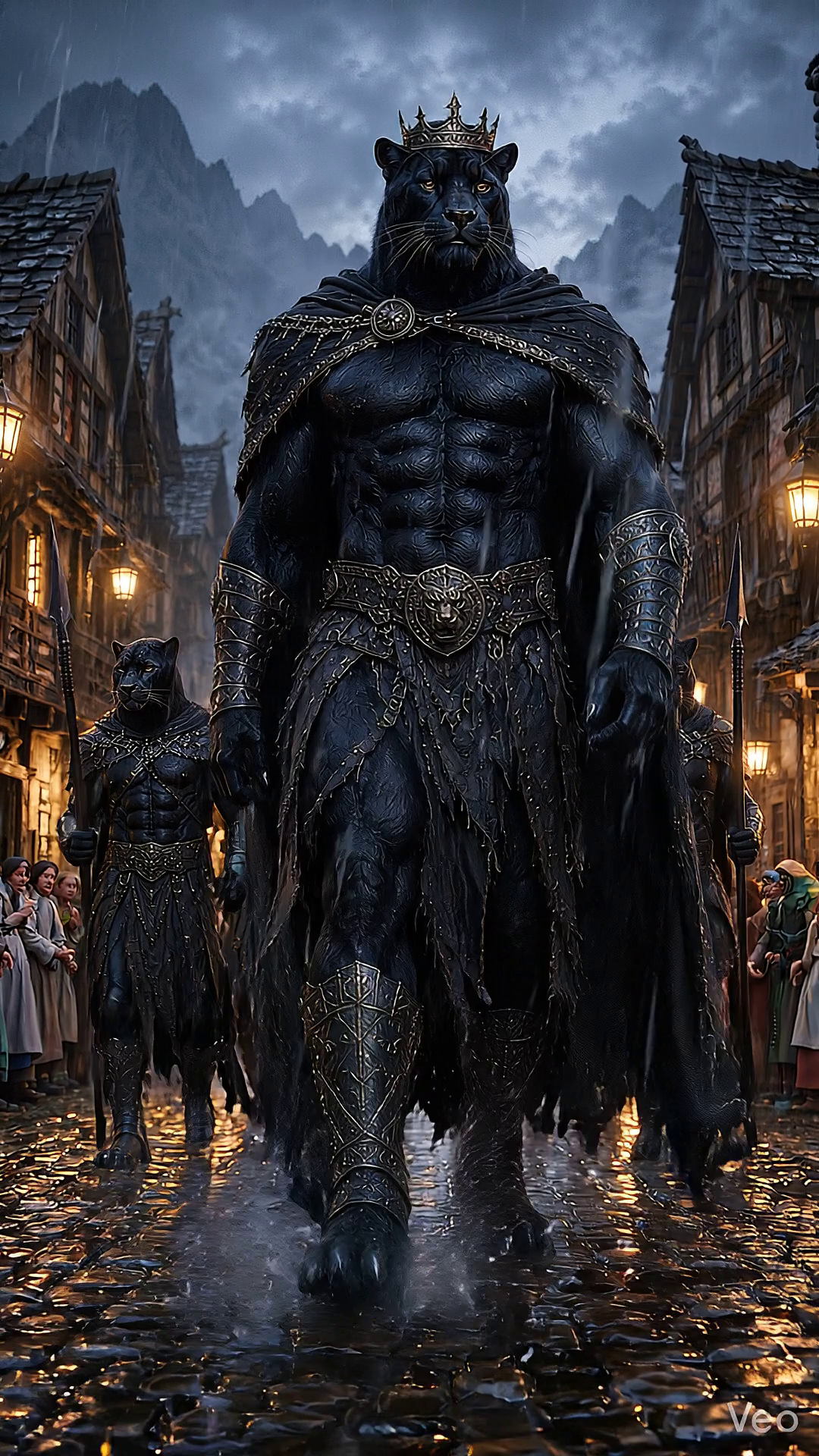
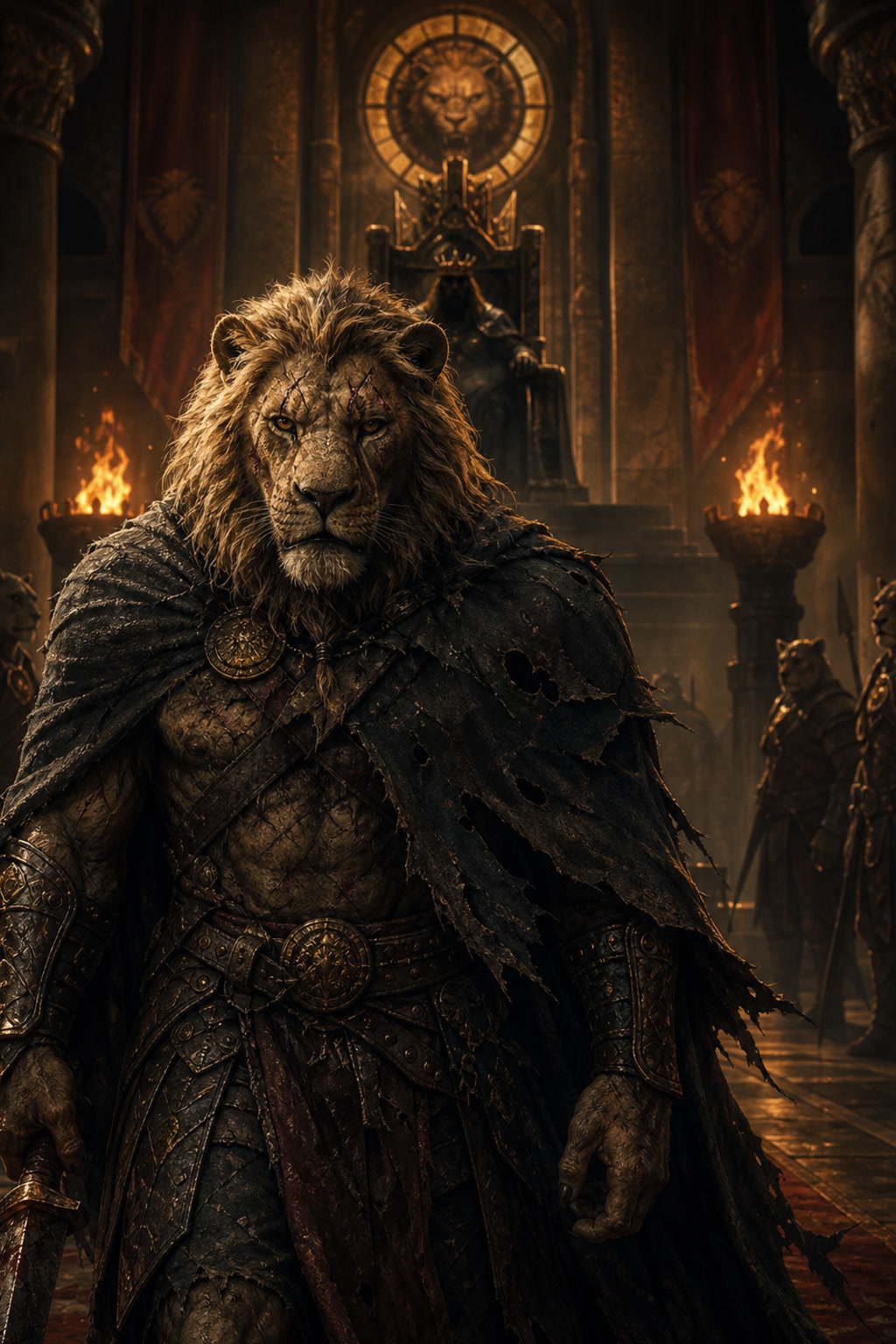
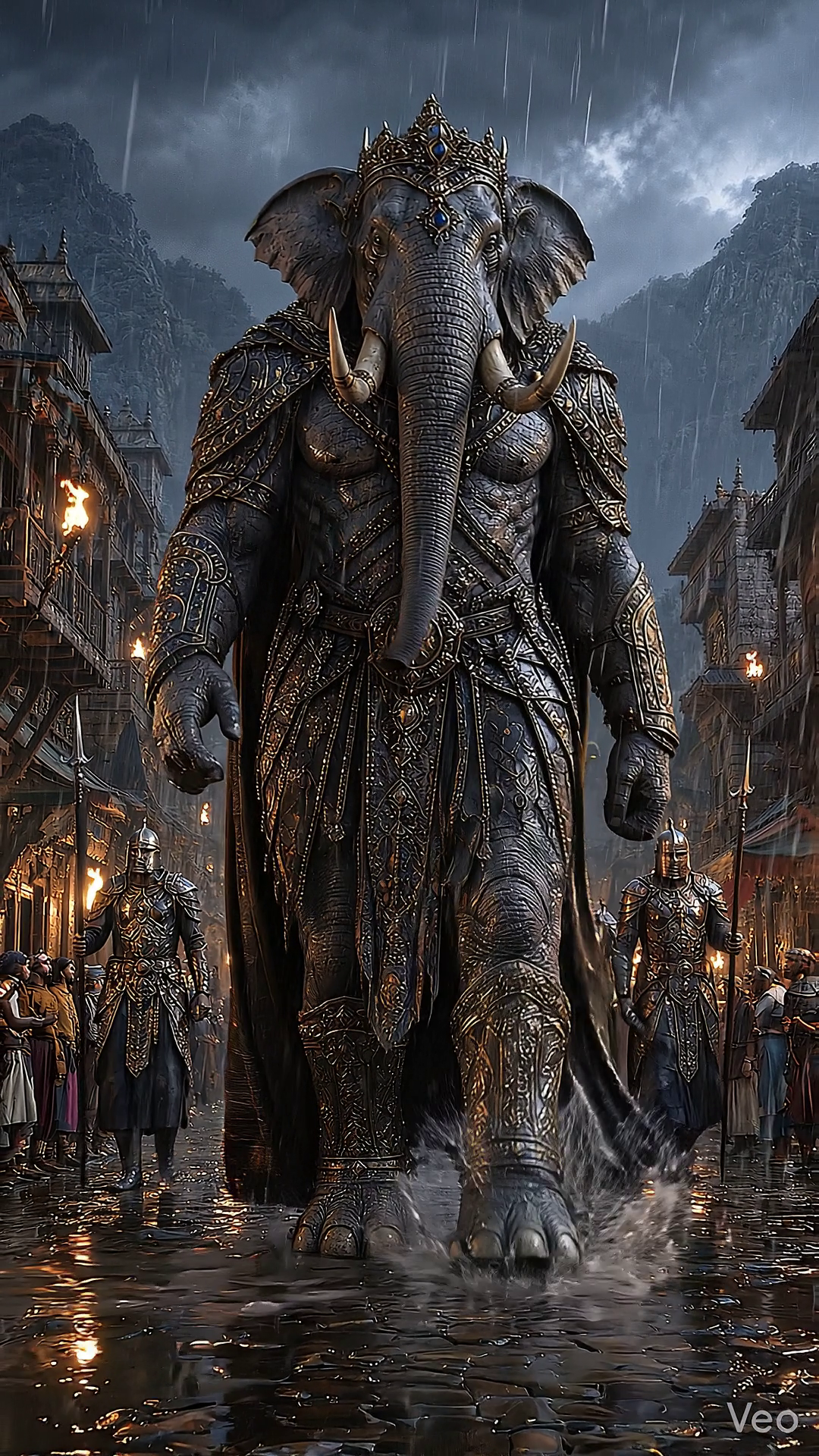
The Elephant King entered the storm village with two armed guards behind him. The crowd expected a ruler from old stories. Instead, the road filled with a giant who had come to remind them whose oath held the mountains open.
This chapter is presented as a complete written tale with curated scene artwork from the realm archive.
The village of Mavren Hold stood where two mountain cliffs leaned close enough to make thunder sound trapped. Rain lived there more often than sun. It ran from slate roofs, hammered the wooden balconies, and turned the main road into a black mirror beneath the torchlight. Every house faced the same narrow street, because the street was the only safe path through the pass.
Long before the village grew rich, the Storm Road had belonged to the Elephant Crown. The first Elephant King had sent stonecutters, bridgewrights, and spear guards into the cliffs when the pass was nothing but mud, wolves, and falling rock. His soldiers carved steps into the old road. His engineers chained the cliff walls with iron. His watchmen stood through winter rain while merchants hurried below with their goods wrapped in waxed cloth.
Mavren Hold was allowed to trade on that road because it swore an oath. The village would keep the crown seal above the western arch, maintain the warning bells, and send tribute each season for the guards who kept the pass open. For generations, no one questioned it. Every child learned to bow beneath the bronze elephant face before crossing the gate.
Then the markets grew loud.
Copper, salt, wool, mountain wine, and blue river glass passed through Mavren Hold in such quantity that the elders began to speak as if the road had chosen the village, not the crown. The old seal was called ugly. The tribute was called waste. The watch bells were said to frighten travelers. Pride rarely arrives as a shout. It arrives as a practical suggestion repeated often enough to sound wise.
The first tribute wagon was delayed after a flood. The second was sent half empty. The third never left the village at all. By the fourth season, the elders had taken the bronze elephant seal down from the western arch and stored it in a cellar beneath broken roof tiles. In its place they hung a bright local crest painted with the village tower and a ring of storm clouds.
For nine days, nothing happened. That was enough time for fools to mistake silence for permission.
On the tenth evening, the rain stopped falling sideways and began falling straight down, hard and heavy, as if the sky had opened a gate. The watch bells rang once without a hand touching them. Then the western arch filled with two spear points, high above the heads of the gate guards.
The royal guards entered first. They were elephant warriors, smaller than the king but broader than any man in Mavren Hold. Their helms were dark with rain. Their tusks were capped in bronze. Each held a long spear upright in both hands, and the blades shone with fire from the village torches. They did not speak. They did not need to.
Behind them came the Elephant King.
He was so tall that the crowd first looked at his crown before they understood the rest of him. Then he stepped fully into the street, and understanding moved backward through the people like wind through wet banners. His elephant head rose beneath the storm clouds. His trunk hung over a bare, massive chest crossed with gold and black ornaments. His arms were thick as carved pillars. His feet struck the flooded stones with enough weight to send water leaping from the road.
The villagers moved aside without being ordered. Men who had argued for independence lowered their eyes. Women pulled children beneath awnings. Merchants dragged their scales and baskets out of the way. The king walked forward at the center of the street, slow and enormous, while the two armed guards kept their places behind him.
Elder Corven came forward because he had been the loudest voice in the upper hall. He wore the new village crest on a blue sash already darkened by rain. His bow was deep, but everyone who saw it knew it came too late. He spoke of flooded bridges, empty granaries, and the cost of repairing the cliff road. He said the village had never meant disrespect. He said the seal had only been removed for safekeeping.
The Elephant King listened. His trunk moved once in the rain. His eyes shifted from the elder to the western arch, where the painted village crest still hung in the place the bronze elephant face had watched for generations. That empty place was the true insult. Hardship could be forgiven. Erasure could not.
The judgment came without spectacle. The bronze seal would be restored before midnight. The tribute would be paid partly in coin and partly in labor on the cliff road. For forty storm nights, Mavren Hold would send its strongest sons and daughters to stand watch beside the crown guards they had pretended not to need. The warning bells would be repaired, polished, and rung at dawn until every child knew their sound again.
Corven asked what would happen if the village refused.
The Elephant King did not lift a weapon. He did not order his guards forward. He only turned his great head toward the cliffs above the road. Every villager followed his gaze. They knew those cliffs. They knew where the stones fell in darkness, where water cut the path from beneath, where old wagons still lay broken under moss. The pass had never been tame. It had only been guarded.
Before midnight, the cellar was opened. Men carried the bronze seal into the street with ropes around it and shame on their faces. Women brought ladders and lanterns. Children watched from behind wet doorways as the elephant crown rose back above the western arch, heavier than anyone remembered and more beautiful than anyone wanted to admit.
The Elephant King remained in the rain until the final pin was hammered into stone. His guards stood behind him with their spears upright, water running from their armor, silent as law. No one cheered. No one dared turn the work into celebration. The village had not won mercy. It had been allowed to remember before the mountain remembered for it.
When the seal caught torchlight again, the king turned toward the gate. His first step sent ripples across the flooded road. His guards followed, one behind-left and one behind-right, their spears cutting dark lines against the storm. Mavren Hold watched them leave in the same silence with which they had arrived.
Years later, whenever rain gathered above the pass and the bells began to move in the wind, the elders told the story again. They told it beside cooking fires, in market stalls, and under the restored bronze seal. A village may grow rich enough to forget who opened its road, but the mountain does not forget. Neither does the king who holds the road against the storm.