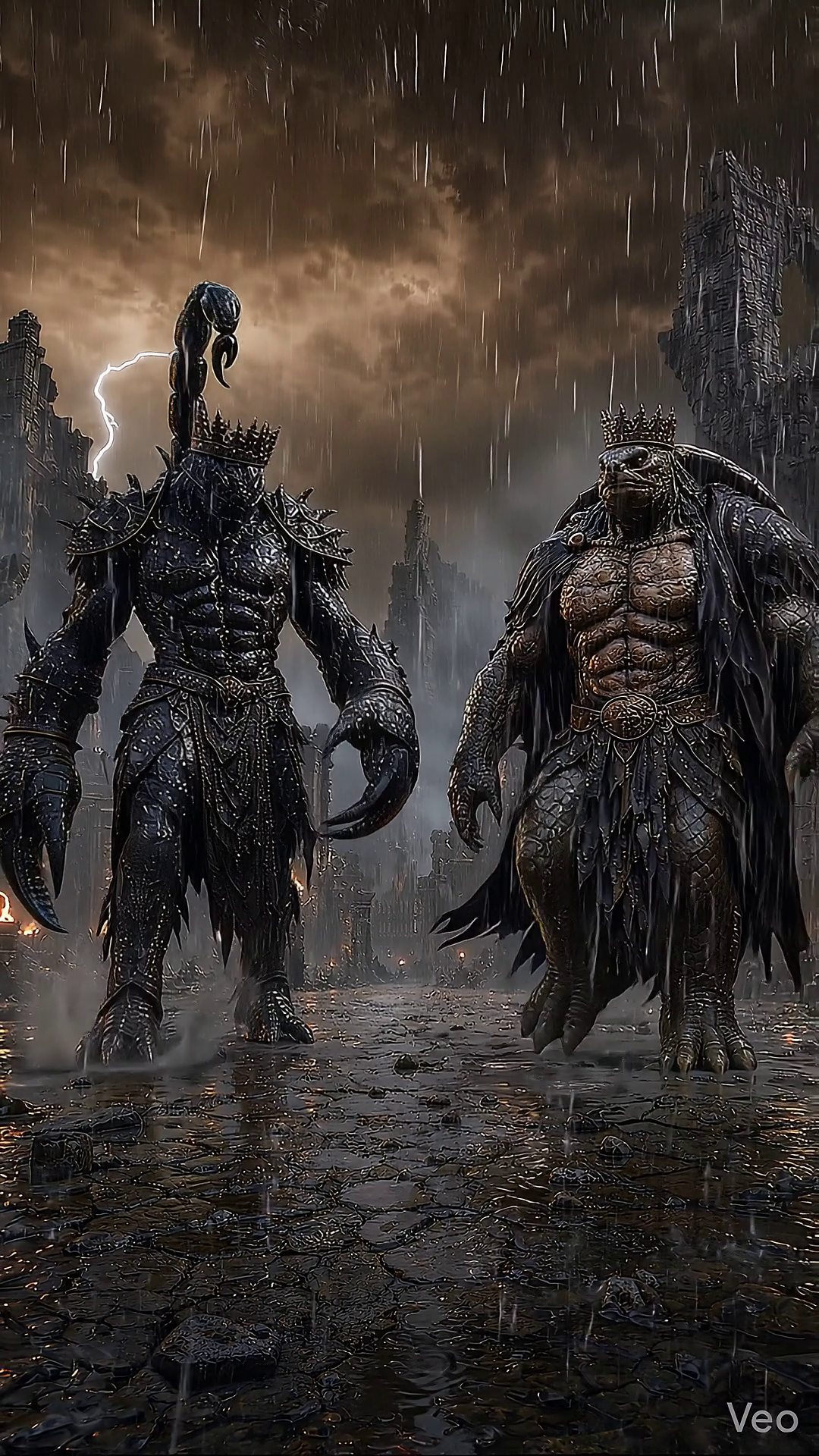
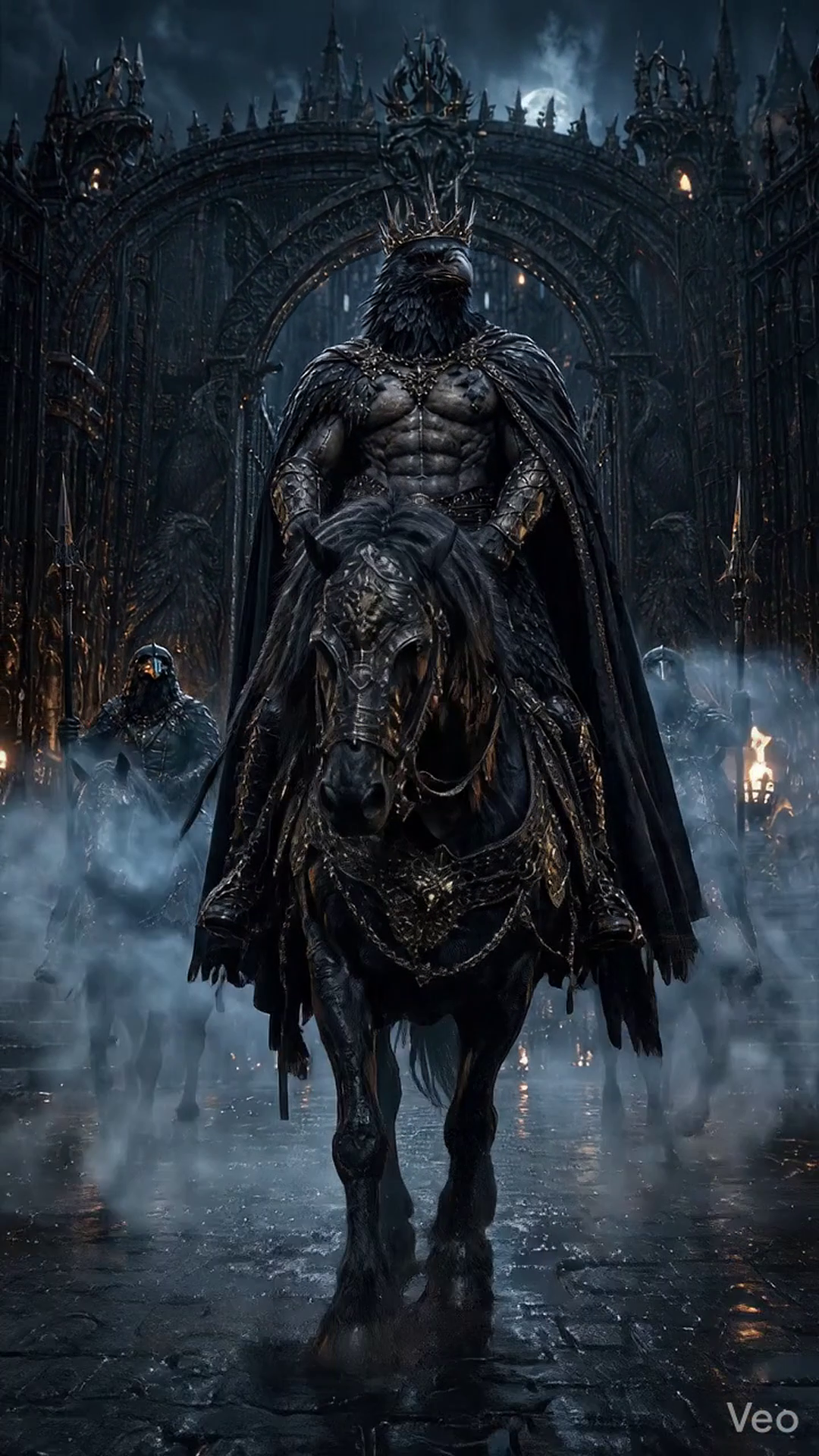
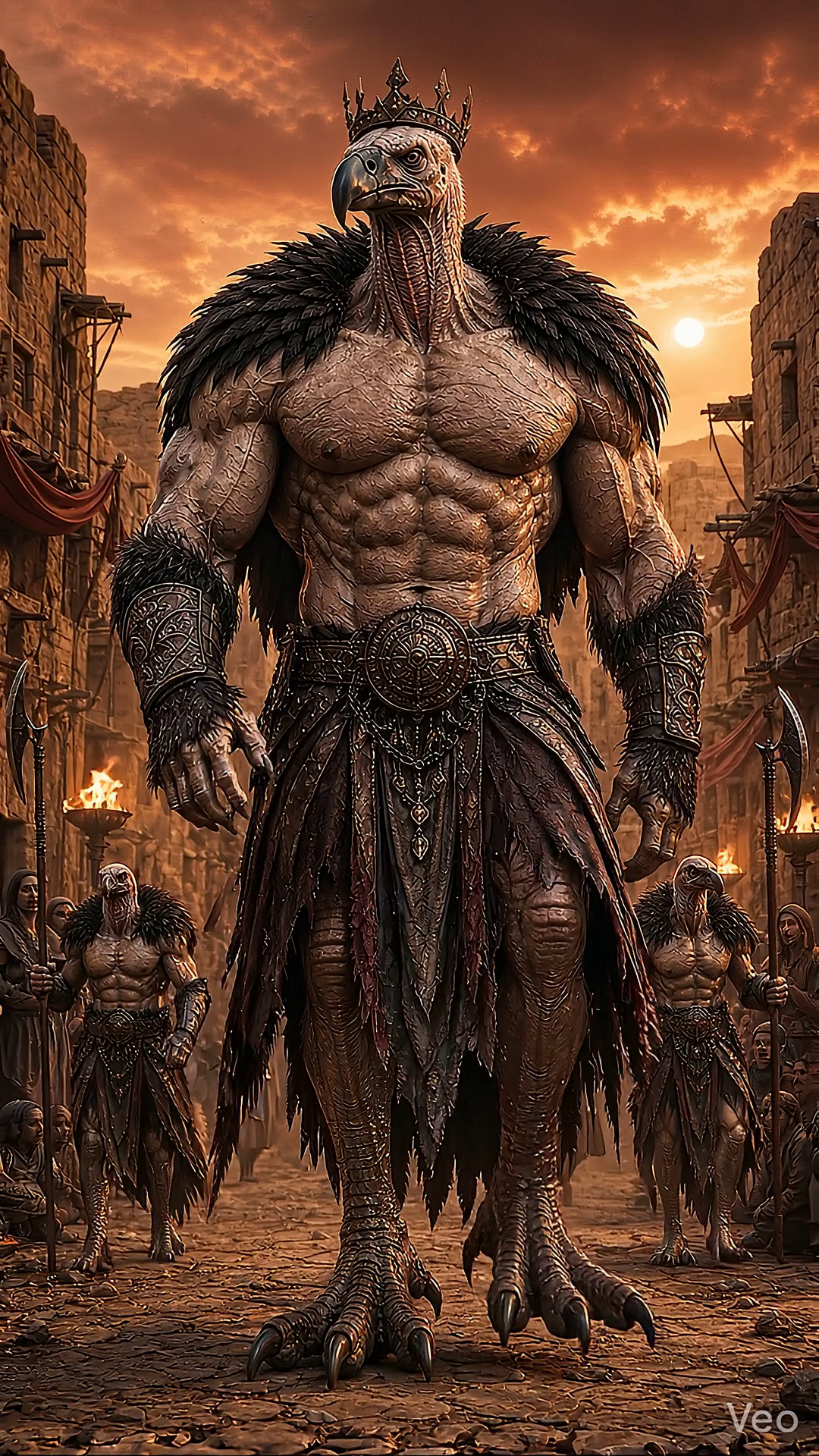
He was banished from the kingdom. But some warriors do not return to ask for forgiveness. They return to take back what they believe was stolen. The throne hall fell silent as the ragged leonine warrior stepped through the doors, scarred by exile, war, and betrayal. At the far end, his brother still sat on the throne. One came to defend a crown. The other came to claim it. I have come back to claim what is rightfully mine.
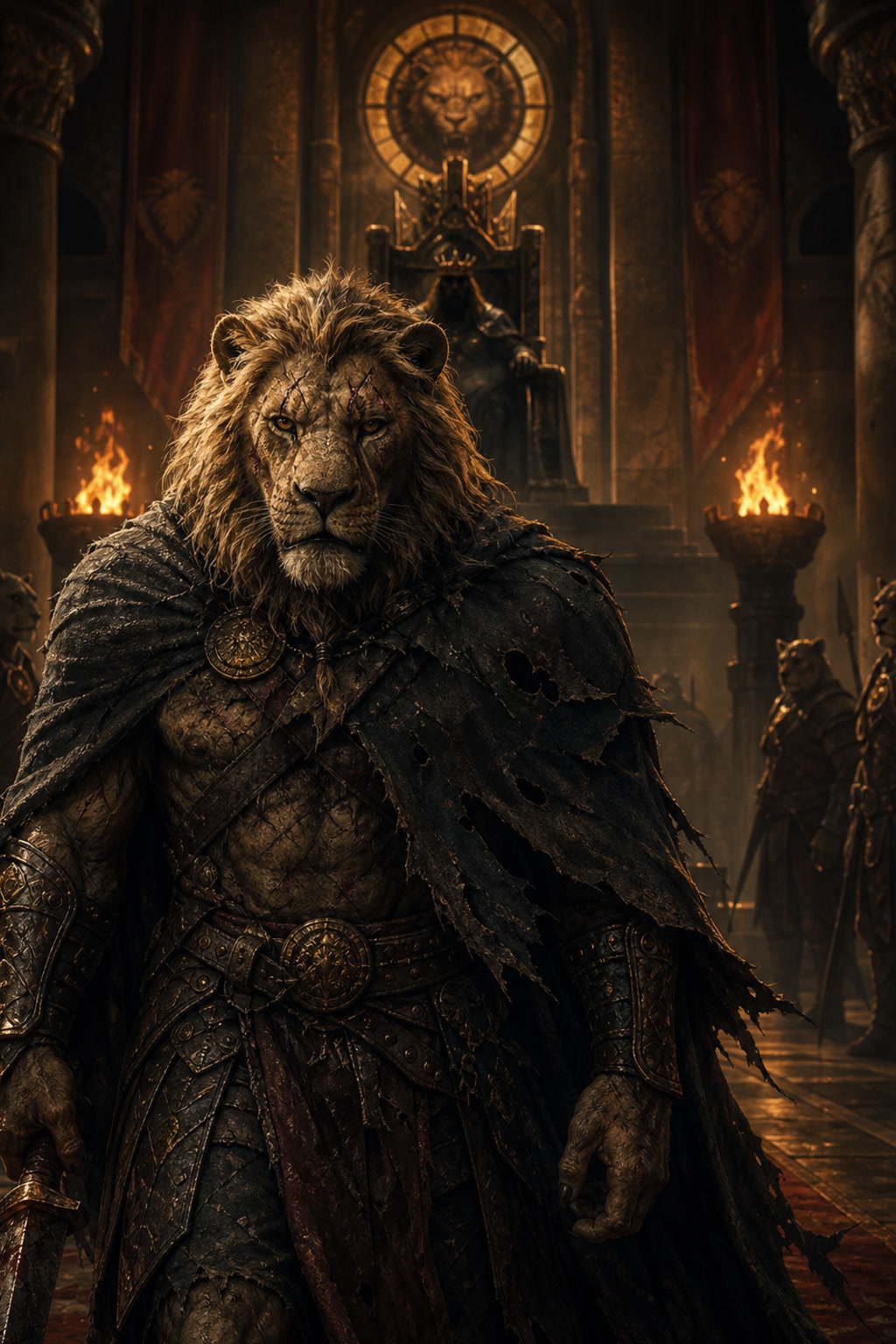
This chapter is presented as a complete written tale with curated scene artwork from the realm archive.
The kingdom had learned to speak of him as a warning. A name removed from banners, a son erased from the feasting songs, a brother turned into a rumor beyond the border roads.
But exile does not always bury a claim. Sometimes it sharpens it. Every scar he carried back through the palace doors had become a witness, and every silent guard in the hall understood that this was not a plea for mercy.
At the far end of the chamber, the crowned brother did not rise. The throne made even stillness look like power. Yet the room had already shifted. The old question had returned with iron on its boots: who owns a kingdom, the one who kept it or the one who believes it was stolen?
The video catches the moment before judgment becomes violence. This page preserves the larger wound around it: banishment, inheritance, betrayal, and the terrible certainty of a warrior who has come home convinced that forgiveness would be a smaller thing than conquest.
Around the central moment, the world keeps pressing in. You can hear distant bells carrying through the streets; you can see a crown no one wanted to name; you can feel a secret everyone pretended not to know. The short video catches the dramatic surface, but the fuller story lives in those details. They tell us that this is not a random confrontation. It is a reckoning that has finally found a public room large enough to hold it.
Every kingdom teaches its subjects which fears are acceptable. Some fears belong to monsters beyond the wall. Some belong to taxes, winter, hunger, or war. This fear is more dangerous because it belongs inside the court itself. When Lion King appears on the village road, everyone nearby understands that a choice no crown could avoid has crossed from rumor into law, and once law is witnessed, it cannot be quietly buried again.
The old songs would probably make the matter simpler. They would name one side noble, one side wicked, and let the crown shine without asking who paid for it. But the better version of this tale is sharper than that. It asks what happens when betrayal and truth meet in the same chamber. It asks whether loyalty is still loyalty when it requires people to pretend they did not hear the truth.
For the ordinary people in the scene, the stakes are not abstract. A command given here can empty a village by morning. A gesture can send sons to the road, close the gates, break a harvest, or invite soldiers into homes that have already given too much. That is why the faces around Lion King matter. They are not background. They are the kingdom measuring how much of itself will survive the decision.
The exiled crown follows the oath that founded the realm, but old laws are never as clean as rulers pretend. They were written after some earlier disaster, then polished until they sounded inevitable. This moment tests whether the law still protects the realm or merely protects the powerful from being questioned. The answer is not spoken directly; it gathers in the pause before anyone dares to move.
What makes the scene work is the pressure between spectacle and consequence. The armor, crown, claws, banners, and torchlight create the mythic shape, but underneath them is a human-sized question: who gets to decide what a kingdom owes? If Lion King answers with force, the realm may survive and become colder. If the answer is mercy, enemies may read it as weakness. If the answer is truth, every comfortable lie in the court becomes unstable.
By the end of the moment, nothing has really ended. That is the point. The video gives us the spark, not the whole fire. After the final look, after the last step, after the room exhales, someone still has to carry orders through the corridors. Someone has to tell the village what was decided. Someone has to stand under the same banner tomorrow knowing that it no longer means exactly what it meant yesterday.
In the larger Epic Fantasy Tales archive, "The Banished Warrior Returns" belongs to the stories where rule is tested in public. It is about an old alliance cracking in public, but it is also about the strange dignity of a realm forced to look at itself. The fantasy is grand, but the wound underneath is familiar: a community can survive danger from outside more easily than it can survive the moment when its own symbols stop feeling innocent.