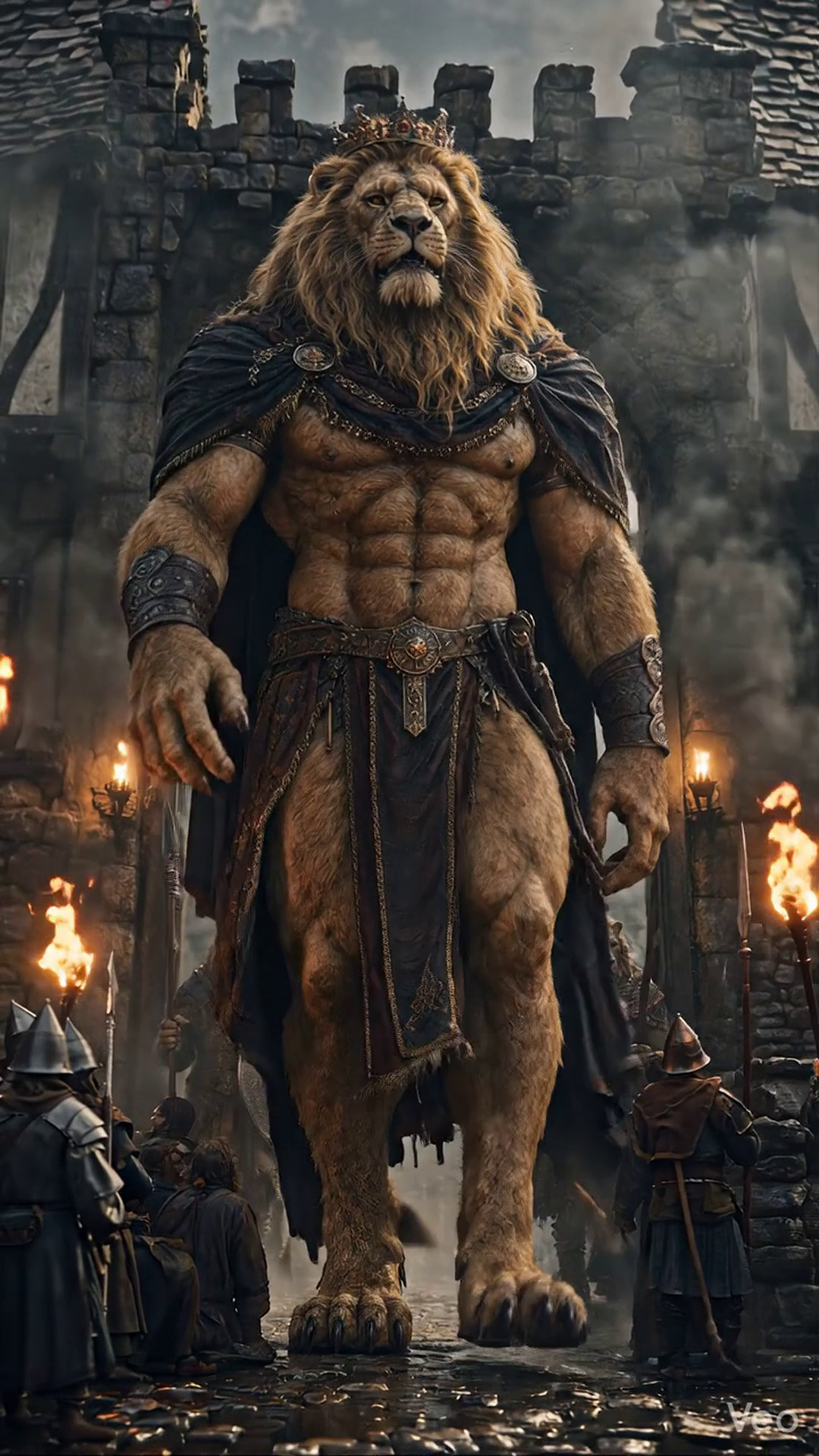
The Crown Gate opened without music. No festival waited behind it. No courtly procession lined the stones. Only torch smoke, wet cobbles, and villagers holding their breath as the Lion King stepped into the village with two armed guards at his back. He did not enter like a visitor. He entered like a ruler returning to a place that had forgotten who built its walls.
The Crown Gate had once been the proudest arch in the southern marches. Its stones were black with age, broad enough for harvest wagons, high enough for banners, and carved with the old mark of the lion crown at the keystone. Every child in the village learned the story: the gate was raised after the first Lion King drove raiders out of the valley and promised that no village under his shadow would ever stand alone again.
That was the story, at least. Stories survive more easily than promises. In the years that followed, kings changed, ministers multiplied, roads shifted, and the valley learned to expect less from distant thrones. The Crown Gate remained, but its meaning thinned. Merchants passed through it. Soldiers taxed through it. Messengers rode past it without stopping. The villagers still touched the old lion mark when storms came, but they did it the way people touch charms they no longer fully believe in.
Then the granaries began to empty before winter. Not from drought, and not from laziness. Grain disappeared under sealed orders. Iron was counted twice and paid for once. Young men were taken for road patrols and returned with wounds they were told not to explain. The village reeve sent petitions north and received replies written in smooth court language: delays, reviews, investigations, assurances. Each letter sounded kinder than the last and changed nothing.
The man responsible was Lord Varric of the eastern toll road, a steward who had learned that fear is cheaper than loyalty. He never called himself a thief. He called himself necessary. He said the border was unstable, the army underfed, the crown distracted, and small villages too emotional to understand the costs of protection. His guards stood at the Crown Gate with spears under the old lion mark and collected grain in the king's name while keeping most of it in Varric's storehouses.
For a while, the villagers endured it. Endurance can look like obedience from a distance. Mothers cut bread thinner. Blacksmiths bartered repairs for turnips. Children learned which streets to avoid when toll guards were drinking. The elders argued over whether another petition would help, whether refusal would bring punishment, whether the lion crown still remembered the valley at all. Nobody agreed, but everyone knew one truth: if the gate no longer meant protection, then it had become only a doorway for power to enter and take.
The old bell rang at dusk on the seventh rain day. It was not rung for fire, death, or wedding. It was rung because the watchman on the wall saw three figures on the northern road. At first he thought they were soldiers moving through mist. Then the tallest shape stepped into torchlight, and the watchman forgot to breathe.
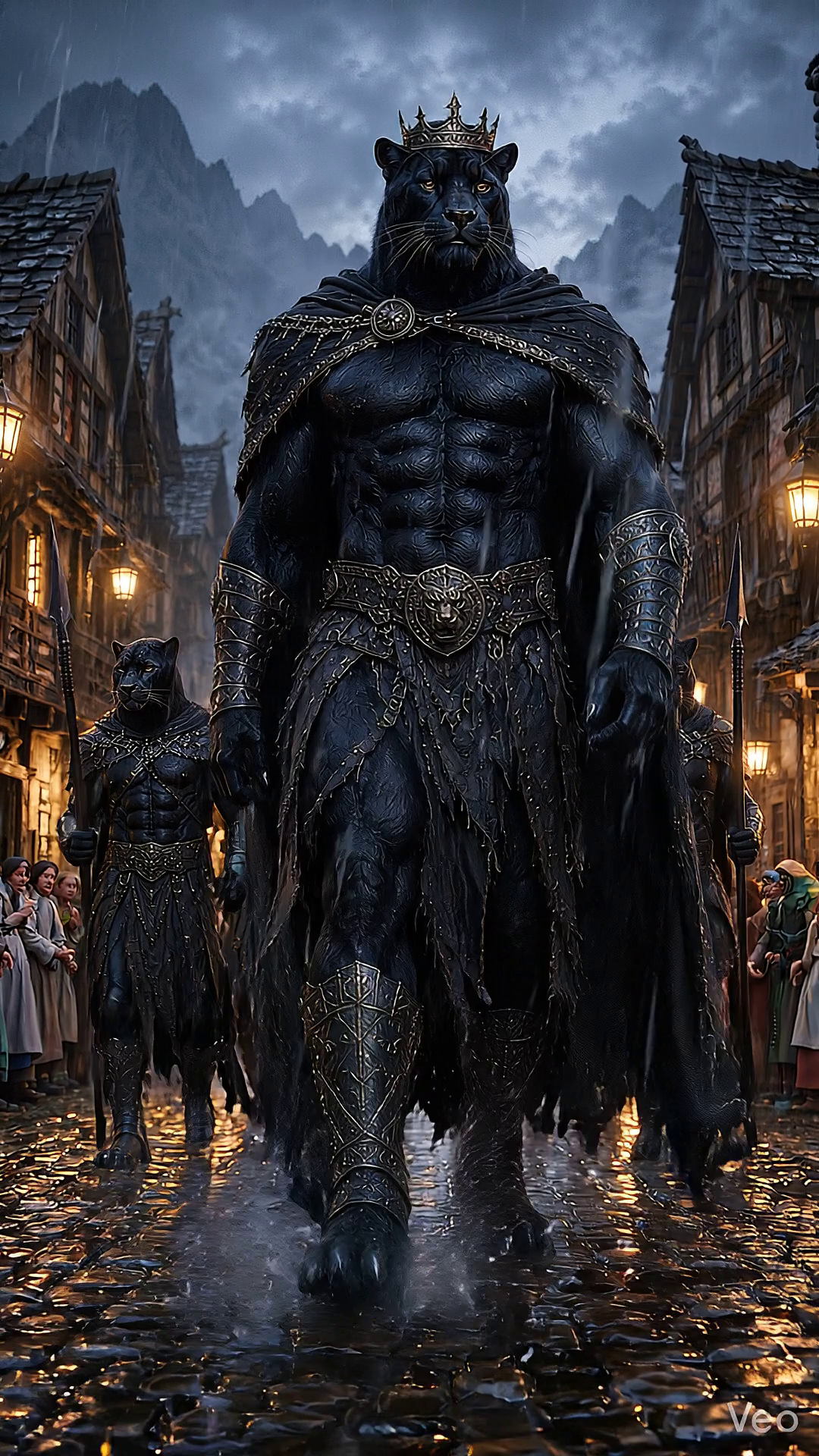
The Lion King came without heralds. He wore a crown dark with old gold, a black cloak heavy from rain, and no armor over his chest. That bare strength frightened the villagers more than polished steel would have. Armor can belong to anyone with money. The king carried himself like something older than armor, enormous and animal, mane shifting in the wet wind, clawed hands open at his sides, eyes fixed on the gate as if stone itself owed him an answer. Behind him walked two smaller lion guards, both armed, both silent, both watching the village roofs and side alleys with the patience of warriors who expected betrayal.
Varric's toll guards tried to form a line beneath the arch. They had frightened farmers and bakers for years, and most had forgotten the difference between courage and habit. The difference returned when the Lion King reached the gate. He did not hurry. He did not roar. He simply walked forward, each step landing on the cobbles with a weight that made puddles tremble. The guards lowered their spears by instinct before they lowered them by choice.
No one cheered when he entered. That would have been too simple, and the village was past simplicity. People watched from doorways with faces hollowed by months of choosing who ate first. Some wanted to believe. Some were afraid belief would make the punishment worse. Some remembered fathers and grandfathers who had spoken proudly of the lion crown and felt anger rise because pride had not fed their children.
The king saw all of it. He saw the shuttered bakery, the patched mill wheel, the carts stripped of useful iron, the toll ledgers stacked under an awning, the old lion mark above the gate stained by smoke from Varric's braziers. He saw villagers lowering their eyes not from respect, but from long practice. That, more than the stolen grain, changed the shape of his face. Theft could be repaid. Fear taught in the crown's name had to be answered in the crown's presence.
Lord Varric arrived late, dressed quickly and smiling badly. He bowed deep enough for ceremony and not deep enough for guilt. He spoke of emergency provisions, unauthorized complaints, and the difficulty of governing frightened people. The Lion King listened. Rain ran through his mane. The two guards behind him kept their weapons upright. When Varric produced the sealed orders, the king took them in one clawed hand and read every line under torchlight.
The seal was real. That was what made the village gasp. Varric had not forged the crown. He had found a weakness inside it: a minister willing to sign what he did not understand, a capital willing to trust numbers over hungry faces, a system so large that suffering could pass through it as paperwork. The king folded the orders once, then twice, and placed them in the mud at Varric's feet.
His judgment did not begin with execution. It began with counting. Every sack of grain taken in the king's name would be returned from Varric's stores before dawn. Every family that lost a son to false patrol duty would receive wages from the steward's own treasury. The eastern toll road would remain closed until the village elected its own gate warden. The minister who signed the orders would be summoned south to read the ledgers aloud in the square, where the people who paid the price could hear every excuse fail in open air.
Only then did the Lion King speak to the villagers. He did not ask for cheers. He did not promise that the kingdom would never fail them again, because only a fool promises perfection after standing in the wreckage of neglect. He promised something harder: that the Crown Gate would mean what it had been carved to mean, and that every official who used his name would answer to the people forced to live beneath it.
By morning, the first carts of grain stood in the square. Children carried loaves still warm from the reopened bakery. Varric's guards, stripped of their toll badges, loaded wagons under the eyes of the lion guard. The old mark above the gate was scrubbed clean, not as decoration, but as evidence. The villagers touched it again when they passed beneath the arch, and for the first time in years the gesture did not feel empty.
Songs later made the entrance sound like conquest. Songs prefer thunder. The truth was quieter and more dangerous. The Lion King did not enter the village to take it. He entered to make the crown visible where it had become only a signature on bad orders. He walked through the gate, immense and unsmiling, and reminded everyone watching that a kingdom is not measured by the height of its palace, but by whether the smallest village can still call its ruler by name and expect an answer.